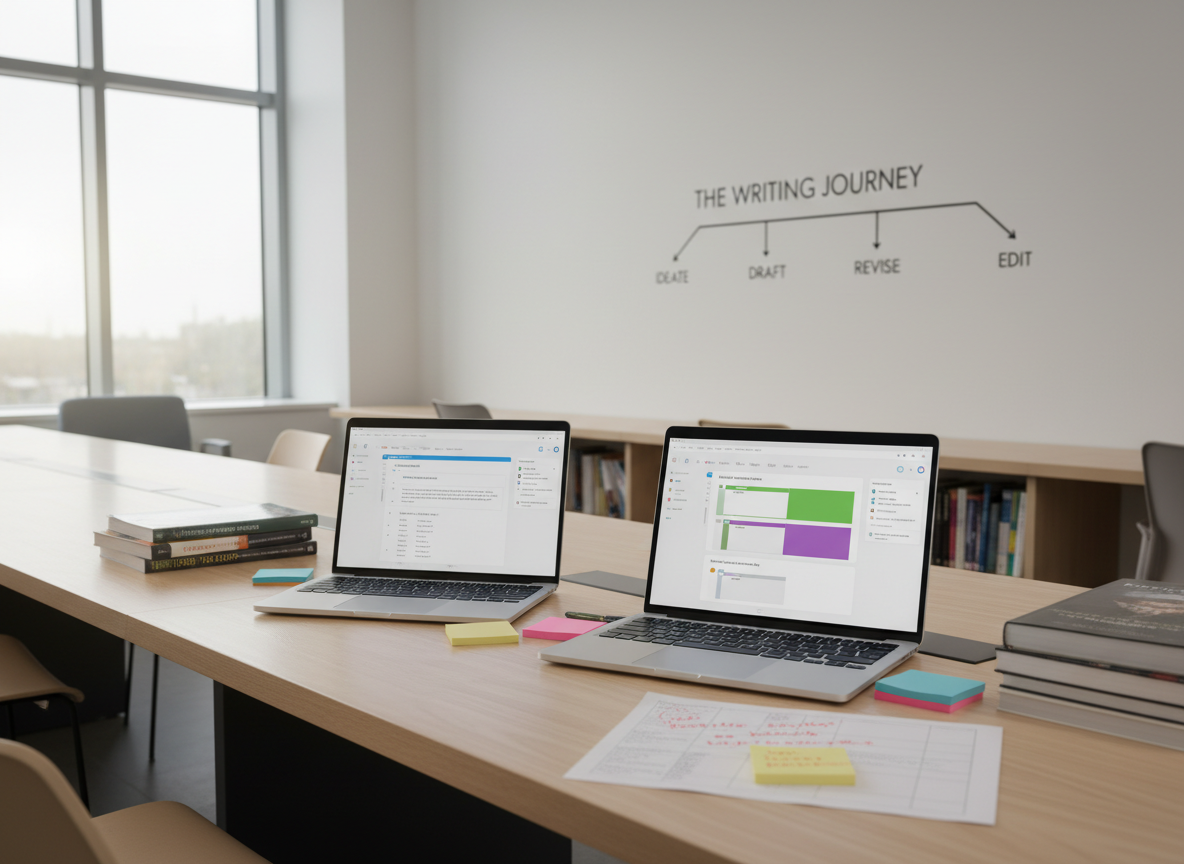
A sleek, modern university writing studio with a long, pale birch desk supporting two open laptops side by side, each displaying different structured writing outlines and AI-generated suggestions in clean interfaces. Around them are neatly stacked academic journals, colour-coded sticky notes, and a printed rubric annotated in fine red pen. Soft morning daylight enters through a large window, reflecting subtly on a matte white wall with a minimalist diagram of the writing process. Photographic realism at eye level, with a shallow depth of field that keeps the laptops in sharp focus and the background gently blurred. The lighting is calm and balanced, creating an atmosphere of professional focus and ethical, thoughtful AI-supported writing practice.

Lecturer Toolkit

Ethical, classroom-ready AI resources helping tertiary writing lecturers design, model, and assess AI-informed writing.

Modules
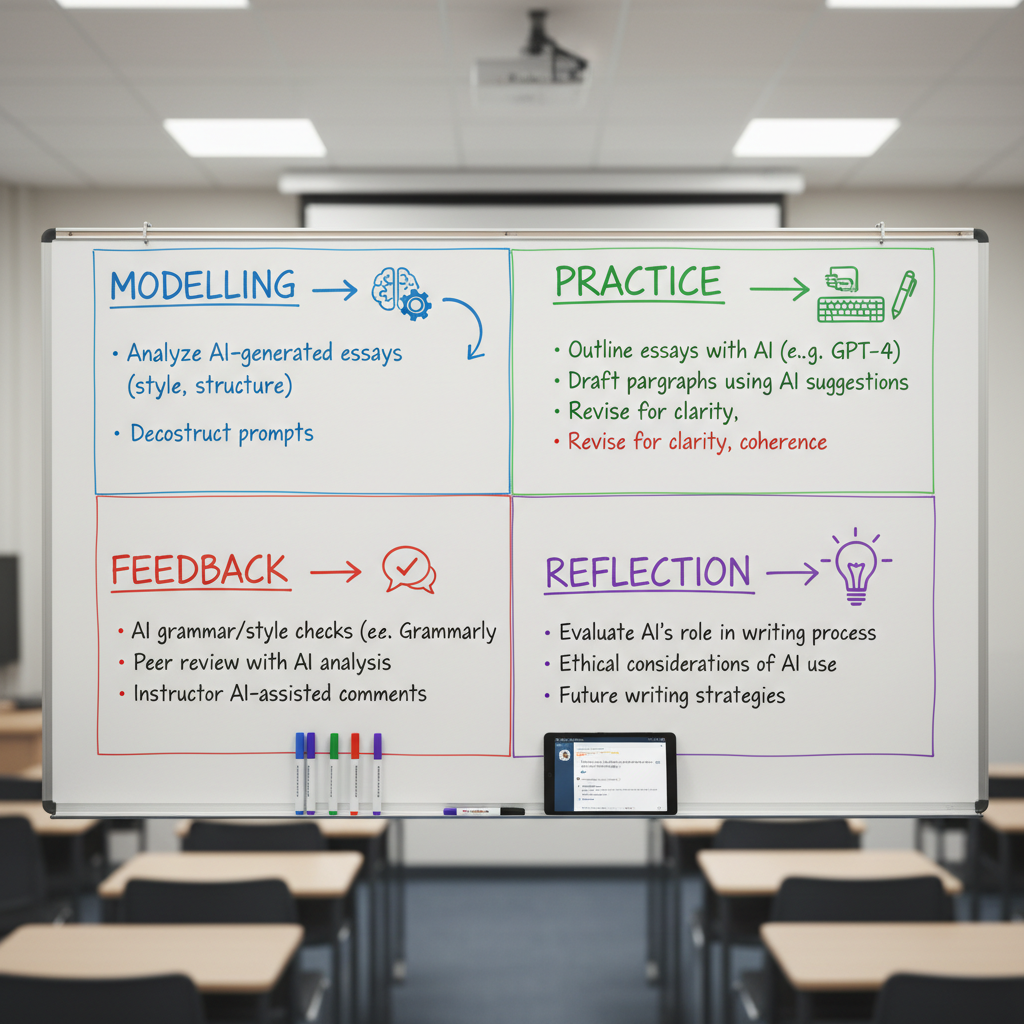
A large, clean whiteboard in a tertiary classroom, covered with an organised lesson plan for teaching academic writing using AI tools. Sections are clearly titled: “Modelling”, “Practice”, “Feedback”, and “Reflection”, each written in distinct colours with arrows linking them to small icons representing AI prompts and outputs. Below the whiteboard, a narrow ledge holds neatly arranged dry-erase markers and a digital tablet displaying an AI interface. Soft, diffused overhead lighting creates minimal glare, maintaining legibility. Shot straight-on with photographic realism and sharp focus across the entire frame, the mood is structured, professional, and practical, evoking careful planning and pedagogical clarity for writing lecturers.

Module 1: Understanding AI Assistants in Academic Writing
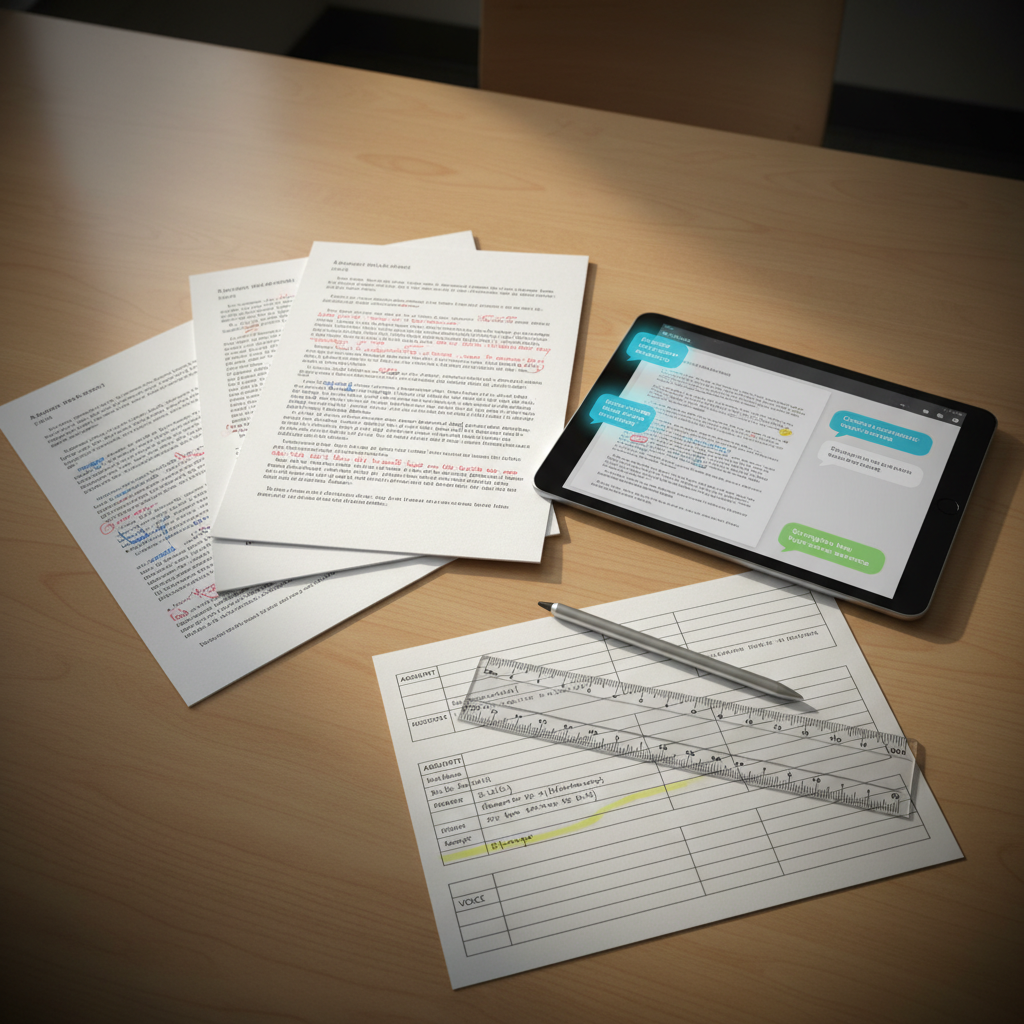
A close-up overhead view of a polished light-wood seminar table in a university office, carefully arranged with printed student essays, each page annotated with detailed handwritten feedback alongside AI-generated comment bubbles on a tablet screen. A slim, silver stylus rests between the pages, and a transparent ruler lies across a rubric highlighting criteria such as “argument”, “structure”, and “voice”. Gentle late-afternoon natural light falls diagonally across the table from an unseen window, casting soft shadows and a warm, reflective glow on the paper. Photographic realism with subtle vignetting focuses attention on the central documents. The atmosphere is reflective and analytical, emphasising ethical, high-quality feedback practices enhanced—but not replaced—by AI.

Module 2: Integrating AI Assistants into Writing Pedagogy

About

Course Structure and Adoption

This toolkit can run as a short intensive, semester module, or self-paced PD strand. Expect 10–20 hours of flexible engagement, no coding prerequisites, and assessment options that emphasise reflective practice over grades. Institutions can adopt the whole package or embed individual modules into existing academic development offerings.

Enquire

Share your context or questions to discuss bespoke delivery, institutional rollout, or support for individual writing lecturers.

Email: support@aiwritingtoolkit.org

← Back

Thank you for your response. ✨

A sleek, modern university writing studio with a long, pale birch desk supporting two open laptops side by side, each displaying different structured writing outlines and AI-generated suggestions in clean interfaces. Around them are neatly stacked academic journals, colour-coded sticky notes, and a printed rubric annotated in fine red pen. Soft morning daylight enters through a large window, reflecting subtly on a matte white wall with a minimalist diagram of the writing process. Photographic realism at eye level, with a shallow depth of field that keeps the laptops in sharp focus and the background gently blurred. The lighting is calm and balanced, creating an atmosphere of professional focus and ethical, thoughtful AI-supported writing practice.